Namo India Mart
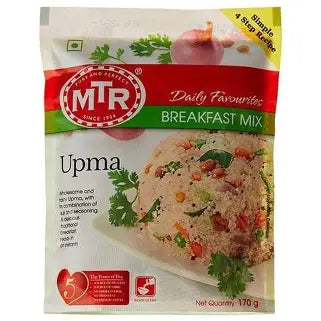
MTR Plain Upma Mix 200gm
MTR Plain Upma Mix 200gm
Couldn't load pickup availability
MTR Plain Upma Mix 200?g — what it is, what’s in it, how to use it, and what to expect ??
? What is it
MTR Plain Upma Mix is a ready?to?make semolina (rava)?based breakfast mix from MTR (Mavalli Tiffin Rooms), designed to let you prepare “upma” — a popular South?Indian / Indian breakfast — quickly at home.
The 200?g pouch contains semolina and a pre-blended set of spices/oils/dal so you don’t need to separately buy/measure individual ingredients.
According to one retailer, the mix “brings the lip?smacking taste of the authentic South Indian style upma.”
?? Ingredients & Nutrition (as per packaging / typical data)
Here’s a typical breakdown (may vary slightly by batch/import) based on publicly available product info:
Typical Ingredients
Semolina (rava / sooji) — ~?75% of the mix.
Edible vegetable fat (often a blend of oils: palm oil, palm?kernel oil, etc.) or oil/fat for cooking.
Pulses / dal (like Bengal gram dal / chana dal) for texture and some protein.
Typical South?Indian seasoning/spices: mustard seeds, curry leaves, green chilli, ginger, salt.
i
Some mixes may also include flavour enhancers / additives like anti?caking agent (silicon dioxide, E551), acidity regulators (citric/tartaric acid) especially in export versions.
Nutrition per 100?g of Mix (i.e. the raw mix, not final cooked upma) — as per some retailer nutrition info.
Component Value (approx)
Carbohydrates ~?60?g
Protein ~?9–10?g
Fat ~?10–11?g (saturated fat ~4?g)
Sugars ~?1?g
Sodium / Salt Information varies (some sources mention total sodium or salt content)
?? Note: These values reflect the mix itself — you dilute with water or milk when cooking upma, so the per?serving nutrition will be different (usually lower calories per portion, depending on water, added vegetables/oil, portion size).
?? How to Use — Making Upma
Preparation is quite simple and quick — this is what you typically do:
Boil water — usually a ratio like ~?2.5 cups water for each 1 cup of mix (or as per package instructions).
Gradually add the mix to the boiling water while stirring to avoid lumps.
Cook for a few minutes until the semolina absorbs water and the upma reaches soft, porridge?like consistency (typically ~?3–5 minutes).
Optionally, you can add chopped vegetables (peas, carrots, beans), nuts, or garnish with coriander/lemon, or temper with a little ghee/oil, for a more wholesome meal and enhanced flavour.
Serve hot — ideally as a filling breakfast or light meal.
As one description says: “for added flavour and nutrition, add boiled peas, carrots, and sprouted beans and serve with coconut chutney.”
?? Who Is It Good For
People who want a quick, easy Indian breakfast without prepping individual ingredients every day.
Those looking for a vegetarian-friendly breakfast — since the mix uses semolina, pulses/dal, and spices.
Busy households or working individuals who want convenience and consistency — the pre?blended spices and dal save time.
Anyone who may want to customise upma — by adding vegetables, nuts, or extra seasoning — so you get both convenience and flexibility.
? Pros & What to Know
Pros
Instant and easy to cook — just add water, cook in minutes.
Vegetarian and fairly complete semolina?based meal with some protein + carbs + fat.
Good for quick breakfasts or snacks, especially when you don’t have time for elaborate cooking.
Shelf?stable, easy to store; no need to buy many separate ingredients/spices every time.
Things to Note
As a “mix,” nutritional content per 100?g is quite dense; actual calories per serving depend heavily on water ratio, portion size, and additives (oil, vegetables).
For a more balanced meal, adding vegetables (peas, carrots, beans) is a good idea — plain semolina upma is mostly carbs.
People with gluten intolerance should avoid it — since base is semolina (wheat).
Taste will be milder compared to fresh home?made upma made from scratch with fresh ingredients and custom spices/herbs.
Share