Namo India Mart
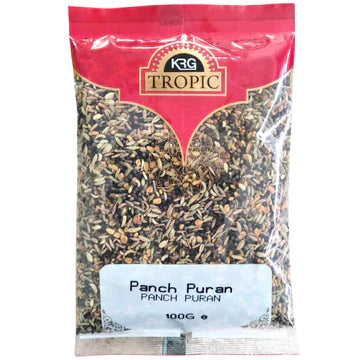
KRG Tropic Panch Puran 100 gm
KRG Tropic Panch Puran 100 gm
Couldn't load pickup availability
KRG Tropic Panch Puran 100 Gm — what it is, what’s inside, how it’s used, and why it’s useful ??
?? What is “Panch Puran / Panch Phoran”
“Panch Puran” (also spelled Panch Phoran / Panch Puran / Panch Phodan) means “five spices” in Bengali / Hindi. It’s a traditional whole?spice mix used widely in Eastern Indian cooking (Bengal, Odisha, Bihar, Assam, etc.).
The mix is used whole — not ground — which means when you cook, the spices crackle/pop in hot oil or ghee and release their aroma gradually.
?? What’s Inside (The Five Seeds)
A typical Panch Puran / Panch Phoran blend — such as this 100?g pack — includes five seeds/spices in (usually) roughly equal proportion:
Spice / Seed Taste / Aroma Contribution
Fenugreek seeds (methi) Slight bitterness, complex depth
Nigella seeds (kalonji / kala jeera) Earthy, slightly onion?like aroma
Cumin seeds (jeera) Warm, nutty undertone
Black mustard seeds (sarson / rai) Pungent, sharp “pop” and distinct flavour
Fennel seeds (saunf) Slightly sweet, aromatic, mild anise?like note
Together these give a balanced interplay — slightly sweet, pungent, earthy, aromatic.
?? How It’s Used in Cooking
Panch Puran is especially useful for giving dishes a distinct flavour profile — here’s how and when you typically use it:
Tempering / Tadka / Chaunk: Heat oil or ghee, add ~1?tsp of the seeds, let them crackle — then add onions, vegetables, dals, or dals?based dishes. This releases the flavours and forms the base for many dishes.
Vegetable dishes / sabzis: Works beautifully with potatoes, pumpkin, eggplant, okra, mixed vegetables — lends a typical Eastern?Indian flavour instead of the usual north?Indian bhuna style.
Dals / Lentils / Legumes: For dals (cholar dal, moong, etc.), using Panch Phoran for tadka gives a fragrant, slightly rustic taste.
Pickles, chutneys, stir?fries: Can also be used for pickling spices or as flavouring in various light stir?fries / chutneys.
? Why It’s Useful / What Makes It Special
Complex flavour, minimal work: Instead of adding many separate spices, one mix gives a layered aroma/flavour — easy and quick.
Distinct regional flavour: Gives dishes a flavour closer to Eastern Indian home?style cooking (Bengali / Odia / Assamese / Bihari) — different from North?Indian “masala?heavy” curries.
Whole spices – healthier & digestible: Because seeds are whole, they release aroma slowly and may preserve more nutrients. Many of the spices (fennel, cumin, fenugreek) are traditionally considered good for digestion.
Versatile: Works with vegetables, dals, pickles, even fish/ meats (if you adapt recipe) — makes it a flexible addition to pantry.
?? What to Keep in Mind
Use in whole?spice form — don’t grind them if you want traditional texture/flavour.
Best used for tempering at the start. Overheating (or burning seeds) — especially fenugreek — can make taste bitter.
Because flavours are distinct from North?Indian spice mixes, the outcome will taste “different” — more aromatic, slightly rustic; might not match typical Punjabi style.
Share