Namo India Mart
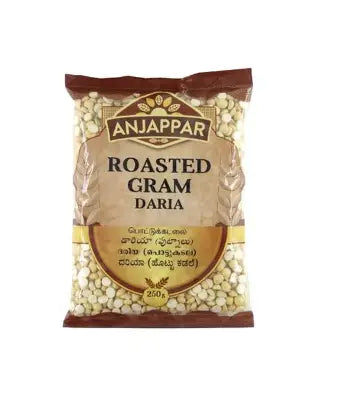
Anjappar Roasted Gram Daria 250 gm
Anjappar Roasted Gram Daria 250 gm
Couldn't load pickup availability
Anjappar Roasted Gram / Daria (250?g) — what it is, how it tastes, why people use it, and things to keep in mind.
?? What is Anjappar Roasted Gram / Daria (250?g)
The product is “roasted gram” — i.e. chickpeas (or Bengal?gram / chana) that have been roasted until firm and crunchy.
“Daria” (or “Pottukadalai / Pottu Kadalai” / “Roasted Chana / Gram”) is a common form of dry snack / ingredient in South India and other parts.
The 250?g pack is a convenient household?size pack — enough for snacking or several uses without risk of spoilage.
?? Taste, Texture & Typical Uses
The roasted gram has a firm, crunchy / crisp texture, similar to nuts or dry roasted pulses; much crunchier than raw/un?roasted dal.
The flavour is nutty and slightly earthy, often mild if plain; you can eat it as-is or season / mix with spices or salt to suit your taste.
Common uses:
As a ready?to?eat healthy snack — plain or lightly salted/spiced. Many people use roasted gram instead of fried snacks or chips.
As ingredient in homemade chaat, salad, or bhel?type mixes — roasted gram adds crunch and protein.
For chutney / podi / powders — especially in some South?Indian recipes, roasted gram (or dal), sometimes ground, is used to make chutneys or spice?based powders.
????? Nutrition & Health Aspects
Roasted gram (chickpeas / chana) is fairly nutritious — especially compared with typical fried snacks. Key points:
Good plant-based protein — pulses like gram are protein-rich, which makes roasted gram a useful protein source especially for vegetarians / vegans.
Dietary fibre content & complex carbohydrates — the fibre helps digestion, provides satiety, and may help in controlling hunger / preventing overeating.
Low in fat and cholesterol-free (when dry?roasted without heavy oils) — making it a healthier alternative to fried / oily snack foods.
Minerals & micronutrients — pulses generally have minerals like iron, magnesium, potassium; roasted gram retains many such nutrients.
Because of these properties, roasted gram is often recommended as a “healthy munchie” — gives energy, protein, fibre — but without excessive oil/fat.
? What Makes It a Good Pick
Crunchy, satisfying snack — good substitute when you want something crunchy but healthier than chips or fried namkeens.
Protein?rich & filling — can help keep you full, reduce hunger pangs, useful for diet?conscious or high?protein meals.
Versatile — eat plain, spice it, add to chaat / salad / bhel / granola?like mixtures — flexible uses.
Convenient — ready?to?eat, no cooking required; good for quick snacking, travel, office lunchbox, evening tea?time.
Vegetarian / vegan / plant?based friendly — ideal for people avoiding meat but wanting good protein & fibre intake.
?? What to Keep in Mind / Moderation & Care
Because roasted gram is dry and fibre?rich, eating a large quantity at once might feel heavy or cause digestion issues — moderation helps.
Even though it’s “healthier than fried snacks,” it’s still a carbohydrate?rich food (pulses) — if you’re managing carb intake (e.g. for diabetes), watch portion size.
Store properly after opening — in a dry, airtight container — to maintain crunchiness and avoid moisture which can make the gram stale or soggy.
If you season it (salt, spices), excess salt could reduce some health advantage; better to use moderate salt/spice or eat plain.
?? Who / When It’s Best For
Anjappar Roasted Gram (250?g) is especially good if you:
Want a quick, healthy, protein?rich snack — for evenings, tea time, travel, or between meals.
Follow a vegetarian or plant?based diet and need good protein & fibre without meat.
Prefer lighter, dry snacks over oily, fried snacks or heavy namkeens.
Want a versatile ingredient — for chaat, salads, spicy snacks, or mixing with other pulses/nuts — to diversify meals/snacks.
Aim for balanced nutrition with convenience — easy storage, ready to eat, no cooking prep needed, yet nutritious.
Voice
Share